The Product Tour
Every screen below is the actual product, loaded with the Demo Family - six months of one explorer's sparks, ships, catches, and theses. Every feature maps to a north star. Every mechanic stands on published learning research, cited inline.
One companion, every season, every page.
JARVIS lives on every page of the academy - a floating companion that knows your explorer's sparks, projects, and weak strands, and always runs the best current engine (the swap history is visible: same JARVIS, rotating engine). Every lesson says 'Use JARVIS on this page to…' - the interactive loop is the curriculum. And the anti-anthropomorphism rule holds: kids can open the hood and see the four parts - model, memory, tools, mixing.
- →In-page chat with Enter-to-send, typing indicator, streamed replies
- →Page-aware starter prompts: 'Use JARVIS on this page to…' on every screen
- →Engine badge + inspectable 'how JARVIS works' panel (model/memory/tools/mixing)
- →Preview build: full UX today, full JARVIS at launch - honestly labeled
Component-level understanding (model vs memory vs tools) survives every model release cycle - and gives kids hype immunity.
Models & Systems concept doc; North Stars 10-12 ↗
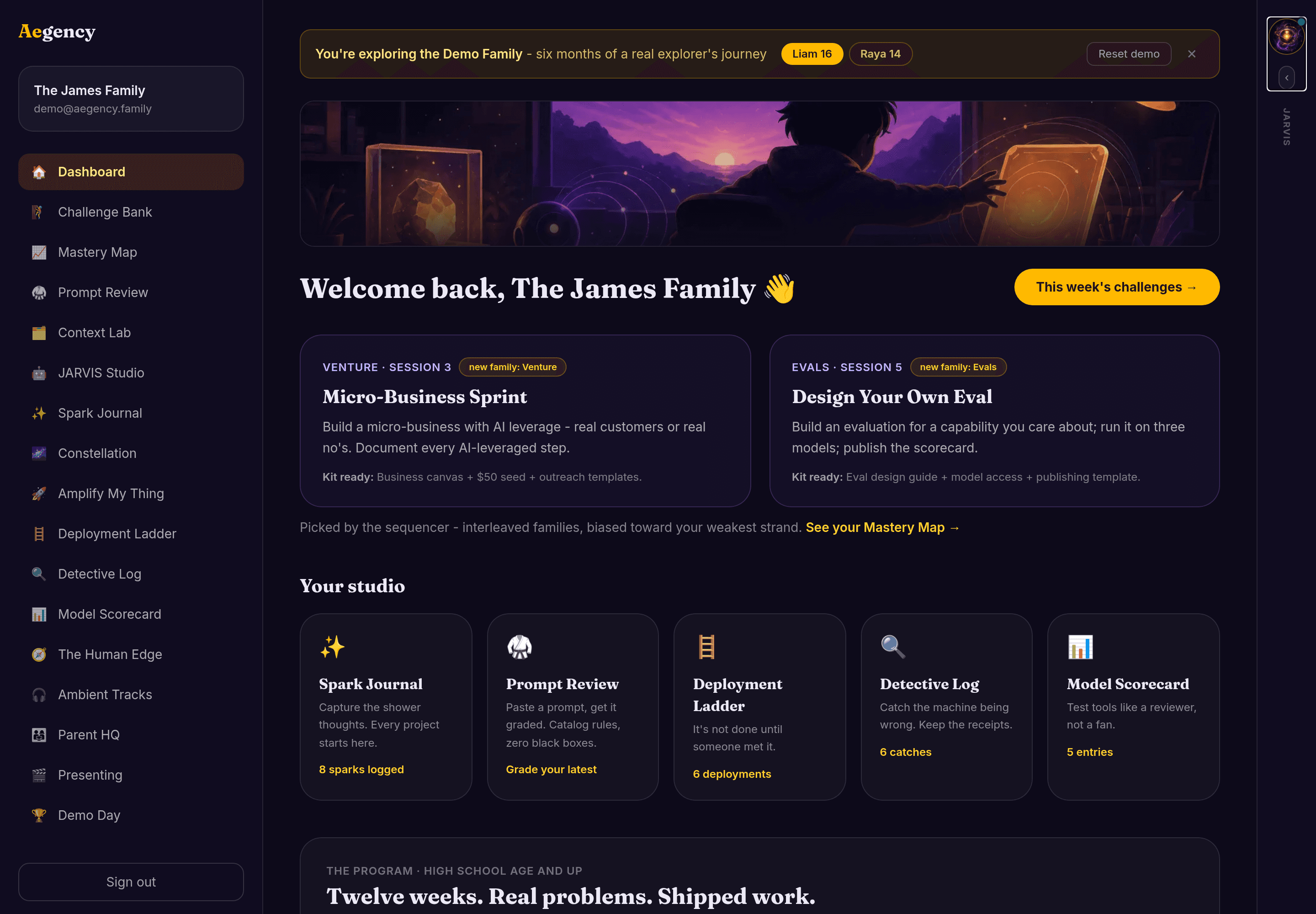
Open the hood. Tune the machine. Trust it correctly.
The Studio is where JARVIS stops being magic: kids inspect and adjust the four components - model, memory, tools, mixing - and see exactly what their companion knows and why. Calibrated trust is the design goal: rely on the machine where it's strong, override it where it's weak. The screenshot is the live Studio from the demo family's account.
- →Component panels: engine, memory notebook, tool hands, mixing rules
- →Memory is readable and editable - nothing JARVIS knows is hidden from the kid
- →Engine swap history visible: same JARVIS, rotating model
- →Preview build: the studio UX is real; full engine control lands at launch
Appropriate reliance on automation comes from calibrated trust - matching trust to the system's actual capabilities - and calibration requires visibility into how the system works (Lee & See, 2004, Human Factors).
Lee & See (2004), trust in automation; research doc §6 ↗
Paste a prompt. Get an autopsy.
The grading machine of the Prompt Dojo: any prompt, instantly graded against the academy's 100-strategy catalog - specificity, one-task-per-prompt, format constraints, audience, success criteria, verification asks - plus the JARVIS One-Shot Canon tier (mission, autonomy, proof, fenced invariants). Server-side, deterministic, and fully transparent: every point traceable to a numbered rule, arithmetic shown on demand. Grades come with personality: from 'Mission Brief' down to 'Prompt Salad.'
- →14 catalog rules + 3 One-Shot Canon checks, each with a fun verdict line
- →Mechanical rewrite: your idea, upgraded structure - copy and re-run
- →Grade archetypes: Mission Brief · Director's Cut · Solid Apprentice · Wish to a Vague Genie · Prompt Salad
- →Runs in a Next.js server function - no rules leaked to the client, no black boxes
Provider guides and practitioner consensus agree: structure, context, constraints, and iteration beat clever phrasing. All 100 strategies catalogued with classroom-ready translations.
100 Epic Prompt Engineering Strategies (Perplexity/HN/X research) ↗

A martial-arts curriculum for talking to machines.
Belt by belt, drill by drill: the Dojo turns the 100-strategy catalog into structured reps - write, grade, rewrite, re-grade. Every drill is scored by the same deterministic server-side grader as Prompt Review, so progress is measured, not vibed. The screenshot shows a live Dojo session from the demo family's account.
- →Belt progression through the strategy catalog, classroom-translated
- →Each drill: attempt → instant grade → mechanical rewrite → re-attempt
- →Scores feed the Mastery Map's prompt-craft strand
- →Same transparent rule engine as Prompt Review - no black-box grading
Expertise comes from deliberate practice - focused reps at the edge of current ability, with immediate feedback on each attempt (Ericsson, Krampe & Tesch-Römer, 1993). The Dojo is that loop, applied to prompting.
Deliberate practice (Ericsson et al., 1993); 100-strategy catalog ↗

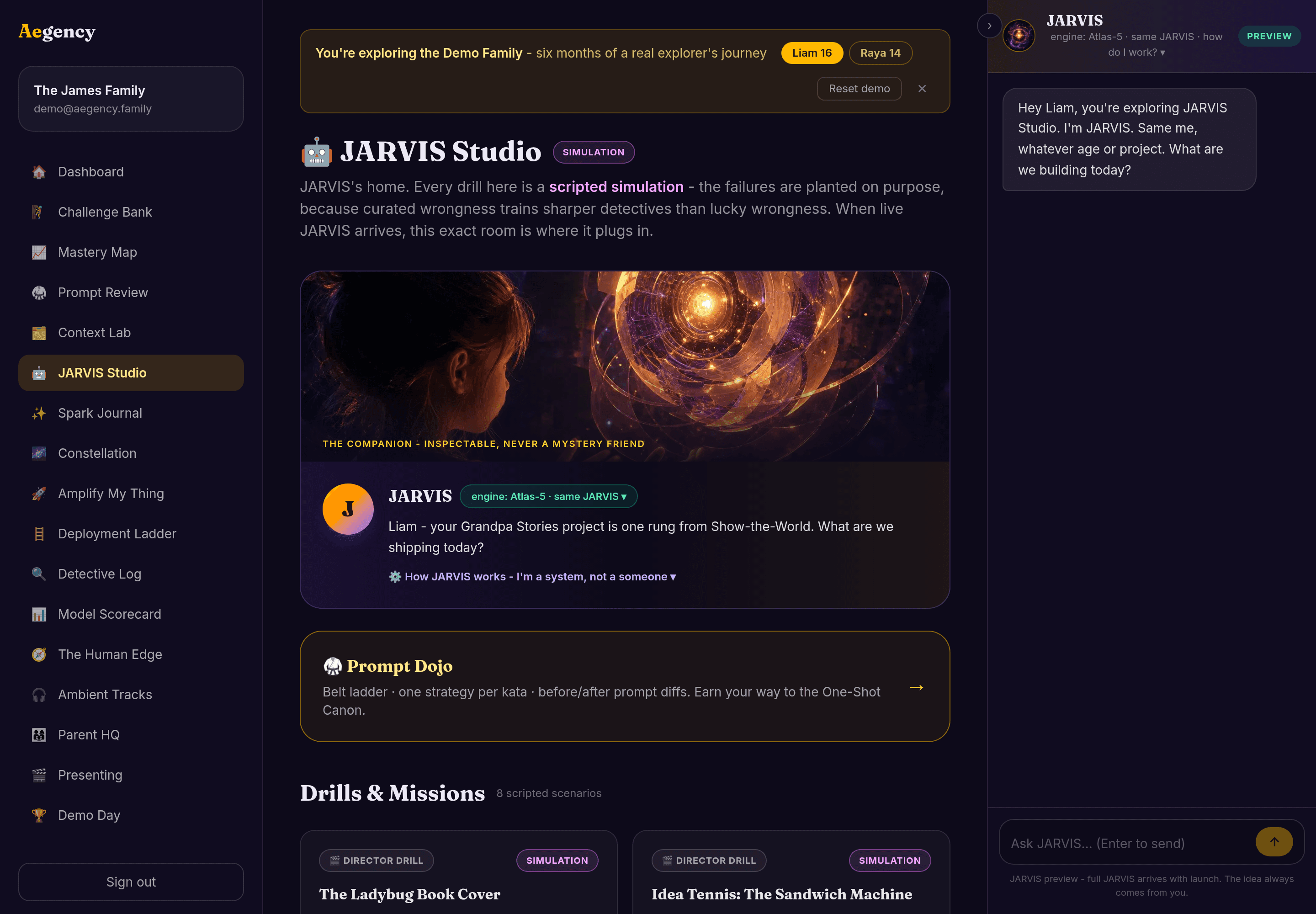
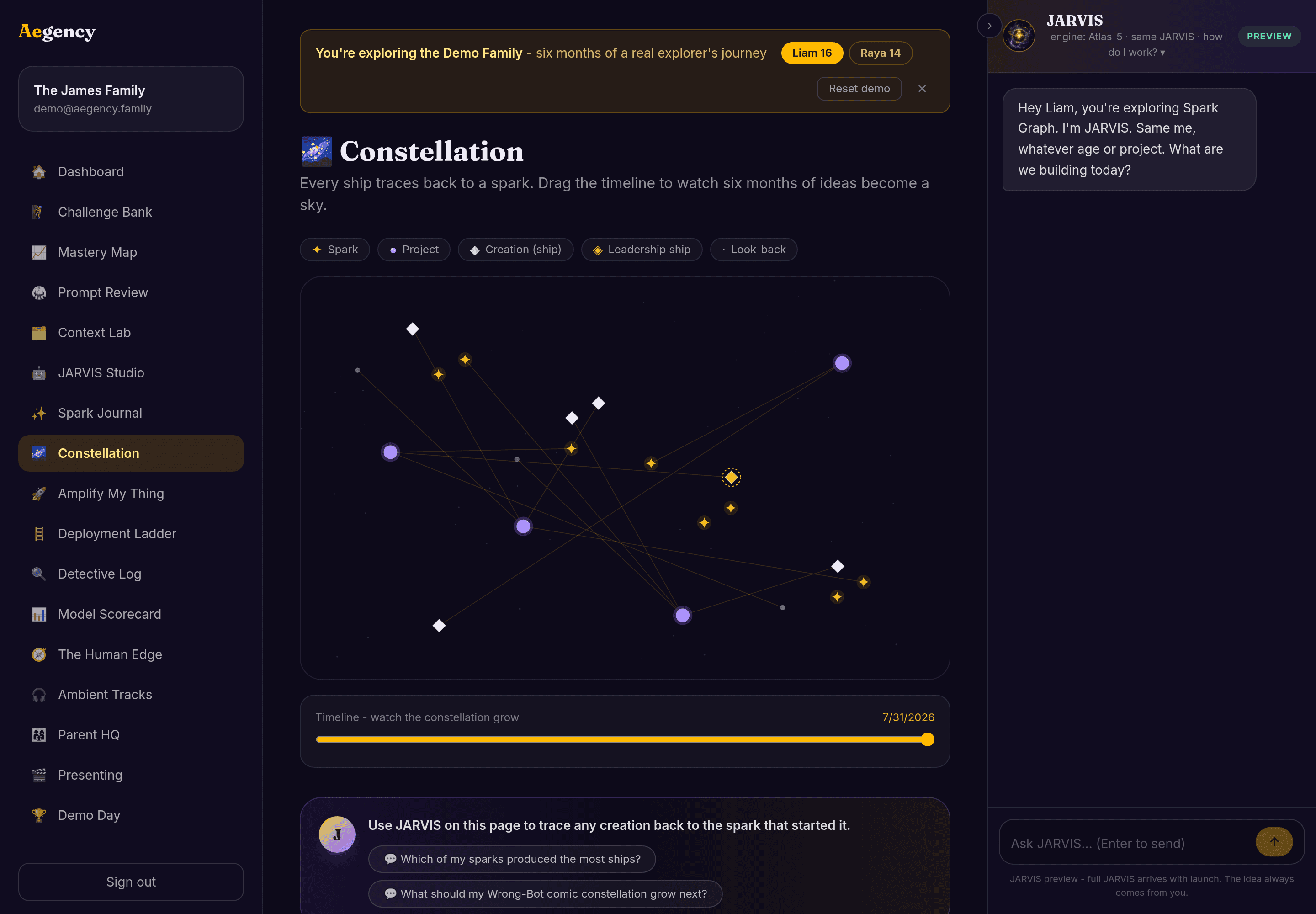
This week's missions, your studio, your whole arc - one screen.
Twice-weekly challenges arrive with their boilerplate kits ready. The studio tiles show a running count of everything your explorer has captured, shipped, caught, and tested - making, not consuming, is the score.
- →Sequencer-driven weekly challenges with kit manifests
- →Live studio counters: sparks, deployments, catches, model tests
- →Program spotlight with the three uniquely-human capacities mapped
Project-based, authentic-audience learning outperforms passive instruction on engagement and transfer.
Research basis: how-kids-learn (PBL/audience-effect section) ↗
The machine has no shower thoughts.
Weird ideas, unassigned questions, movies in their head - captured and honored. The academy rule: every project must root in a journal entry. No generic projects, ever. The child is always the source; AI is the amplifier.
- →Five spark types: shower thoughts, can't-stop-drawing-it, unassigned questions, movies in your head, things you're drawn to
- →Monthly review ritual with a parent or mentor
- →Sparks promote into projects - the graph enforces the lineage
Autonomy - working from self-chosen goals - is one of the three pillars of intrinsic motivation in Self-Determination Theory (Deci & Ryan).
Self-Determination Theory, applied in learning pattern #10 ↗

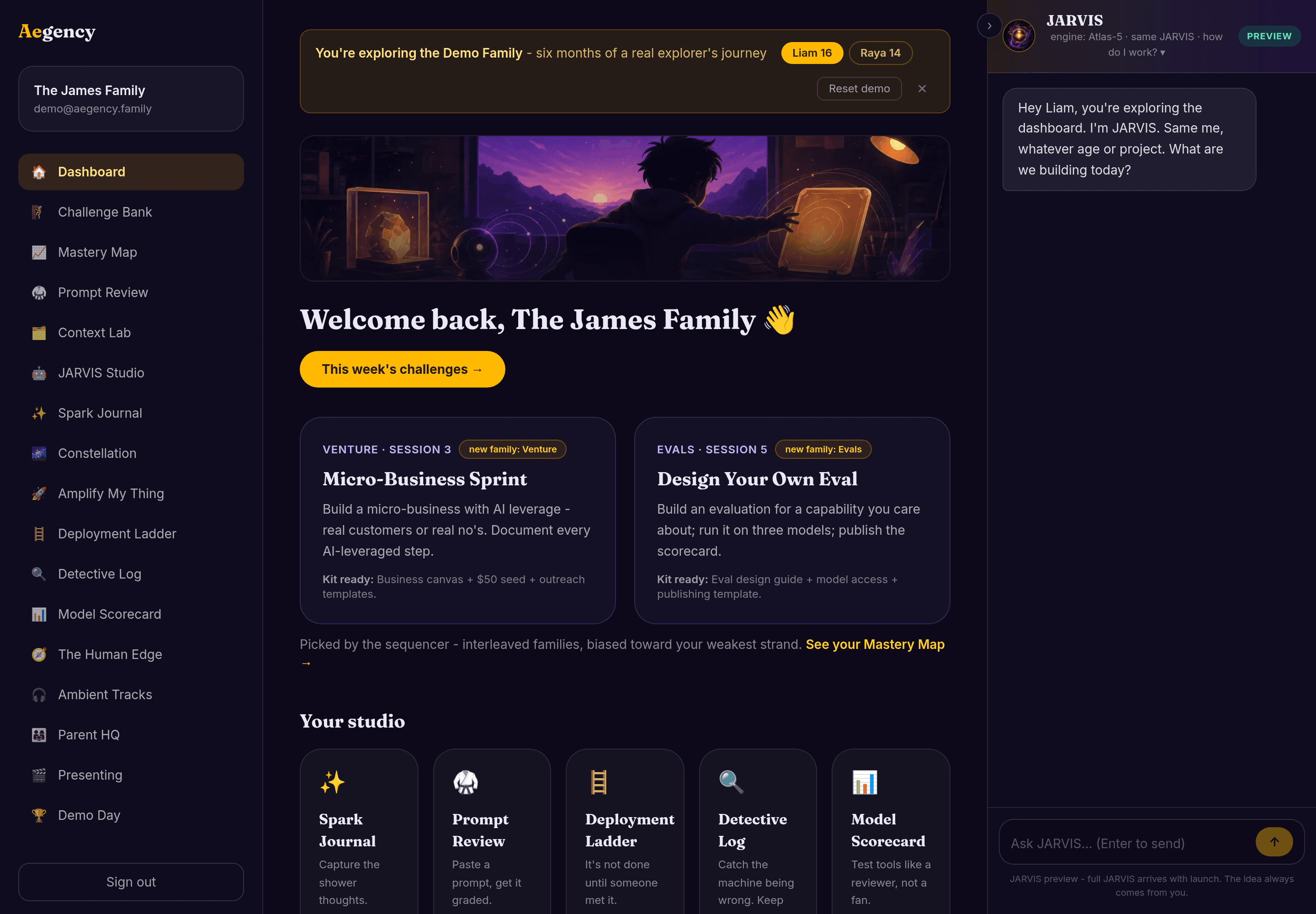
Seasons of curiosity, drawn as a night sky.
The Spark Graph rendered as a constellation: every journal entry a star, every promotion to a project a line, clusters emerging where a real interest is forming. Parents and mentors see at a glance which sparks are one-offs and which are becoming an identity. The demo shows six months of the James family's real seeded graph.
- →Every star traces back to a dated Spark Journal entry
- →Cluster detection surfaces emerging interests before the kid names them
- →Project lineage lines: spark → project → deployment rung
- →The monthly review ritual happens on this screen
Interest develops in phases - from triggered situational interest to well-developed individual interest - and deepens when it's noticed, supported, and re-engaged over time (Hidi & Renninger's four-phase model, 2006).
Hidi & Renninger (2006), four-phase interest development; research index ↗
The engine that decides what Tuesday's challenge is.
Five strands of the craft, every skill node scored from real shipped work - and the Sequencer schedules what comes next: due retrievals first, then interleaved task families, then new material. It's the invisible spine behind the twice-weekly challenges on the dashboard. Nothing on this screen is self-reported; it's all derived from shipped work.
- →Skill nodes light up as evidence accumulates - never from checkbox self-grading
- →Spaced-retrieval queue with due dates per strand
- →Interleaving rules mix bridges, money, games, and design families
- →Weak strands quietly get more reps; strong strands get stretch tasks
Retrieval practice beats re-study for long-term retention (Roediger & Karpicke, 2006), and interleaving task families outperforms blocked practice (Rohrer & Taylor, 2007). The Sequencer implements both by default.
Roediger & Karpicke (2006); Rohrer & Taylor (2007) - learning patterns #1-3 ↗
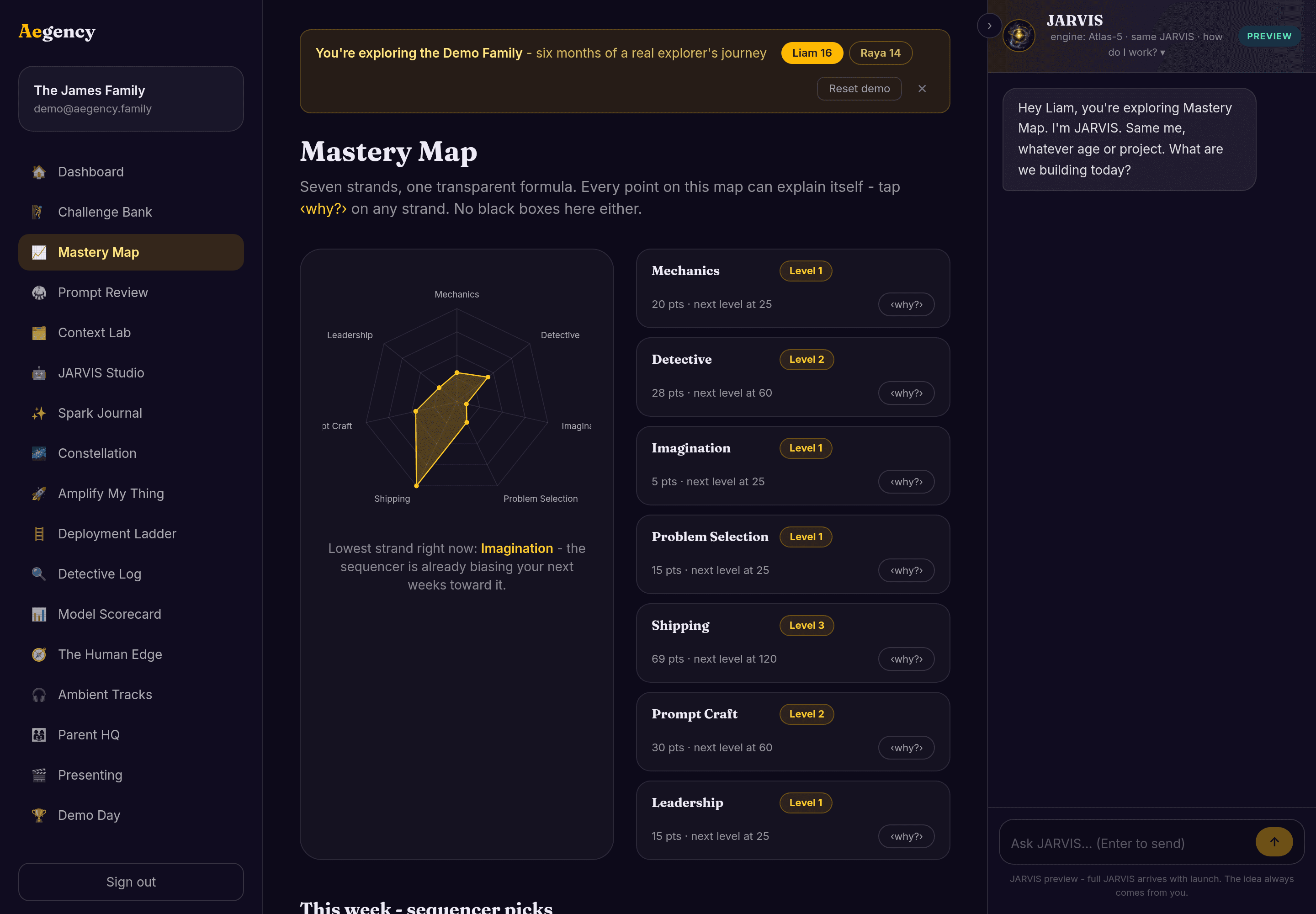
It's not done until someone met it.
Four rungs: show one person → show a room → show your community → show the world. Every project ends on a rung, and the look-back question that matters gets logged: what did people say back? Feedback only exists after deployment.
- →Rung tracker lights up as the explorer climbs
- →Audience reactions logged as first-class data
- →Ship Rails: portfolio page + print-ready one-sheet generated for every shipped project
- →Courage is a muscle: small weekly ships beat someday-masterpieces
Feedback is among the highest-effect-size interventions in education (Hattie's synthesis of 800+ meta-analyses, d≈0.7).
Visible Learning; applied in learning pattern #7 ↗
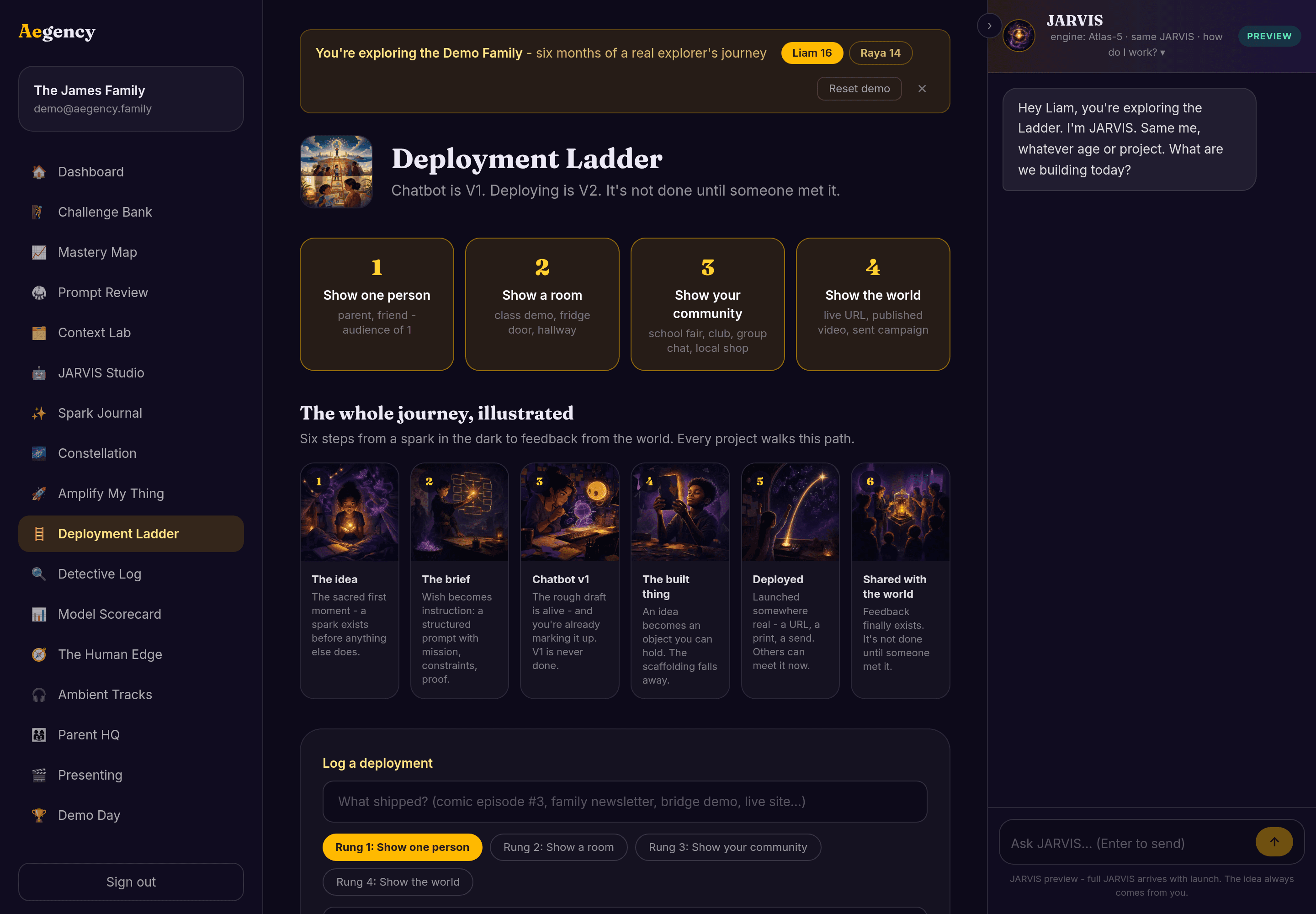
The ROI view: what actually got made, caught, and verified.
The parent-facing ledger of proof: creations shipped, machines caught lying, verification habits trending, rubric movement per strand - every number traceable to a real made thing or logged catch, none of it self-reported. This is what replaces the report card. The shot is the live dashboard on the seeded demo account.
- →Season-over-season rubric movement per strand
- →Verification-habit trendline fed by Detective Log catches
- →Every chart drills down to the underlying creation
- →Exports to a portfolio parents can show anyone
Assessment from authentic work products predicts transfer better than seat-time proxies; the academy's whole evidence model is built on the real things kids make.
Research basis: how-kids-learn (assessment & PBL sections) ↗

Catch the machine being wrong. Keep the receipts.
Kids race to catch AI mistakes and log HOW they caught them - library books, measurements, second sources. Confidence ≠ correctness, learned as a game and kept as a lifelong habit. This is our SAT score: verification.
- →Two-source rule: an AI answer isn't true until checked
- →Career catch counter - the badge of a working skeptic
- →Catches feed the verification-habit trend on the parent dashboard
Children over-trust confident-sounding machines; explicit 'the machine can be wrong' experiences measurably recalibrate that trust.
Kids' mental-models research (research doc §6) ↗
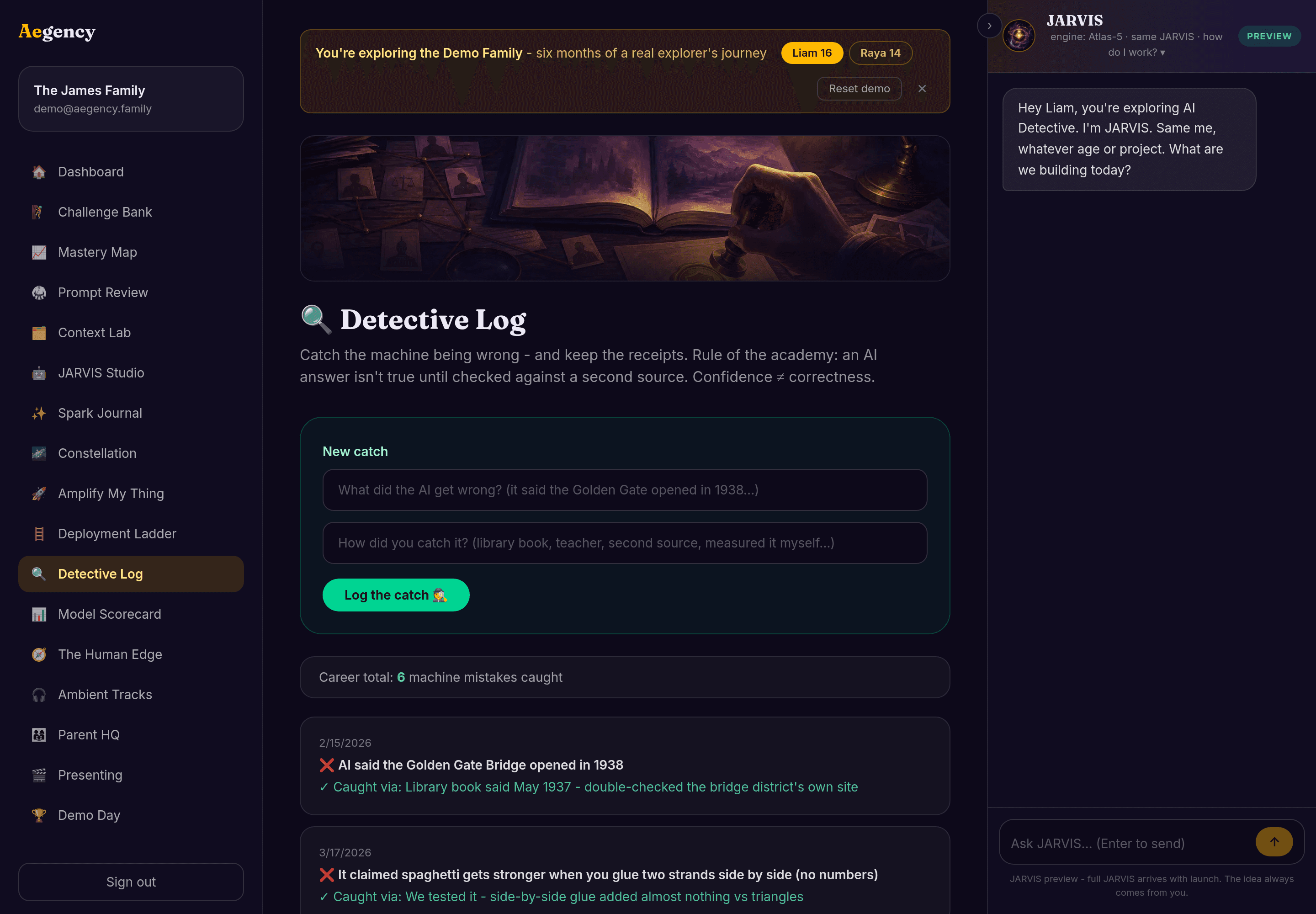
Test tools like a reviewer, not a fan.
Same task, different engines, honest grades. Kids watch the 'best' model rotate under them and learn the systems view: a mediocre model with great memory and tools beats a genius trapped in a chat box. Don't marry an engine.
- →Good-at / bad-at columns with letter grades
- →Re-test prompts when new engines ship
- →Feeds the JARVIS engine-swap literacy: same companion, rotating engine
Component-level understanding survives every model release cycle; product loyalty doesn't. Hype immunity is teachable.
Models & Systems concept doc ↗
Will AI ever beat your favorite human? Prove it. Date it. Re-test it.
Pick your favorite comic, author, or YouTuber. Name exactly three things that make them great. Test the machine on precisely those three. File a dated, revisable thesis - and re-test it against next year's best model. If the ceiling theory breaks, our kids notice first, with evidence.
- →Five-step scaffold: expert → three strengths → test → compare → thesis
- →Annual re-test ritual against the new best model
- →The elements kids find irreplaceable in their heroes become the ones they cultivate in themselves
Close reading of excellence + dated, revisable positions train calibrated judgment - comfort holding a thesis against future evidence.
Human Communication Ceiling concept doc (signature exercise) ↗

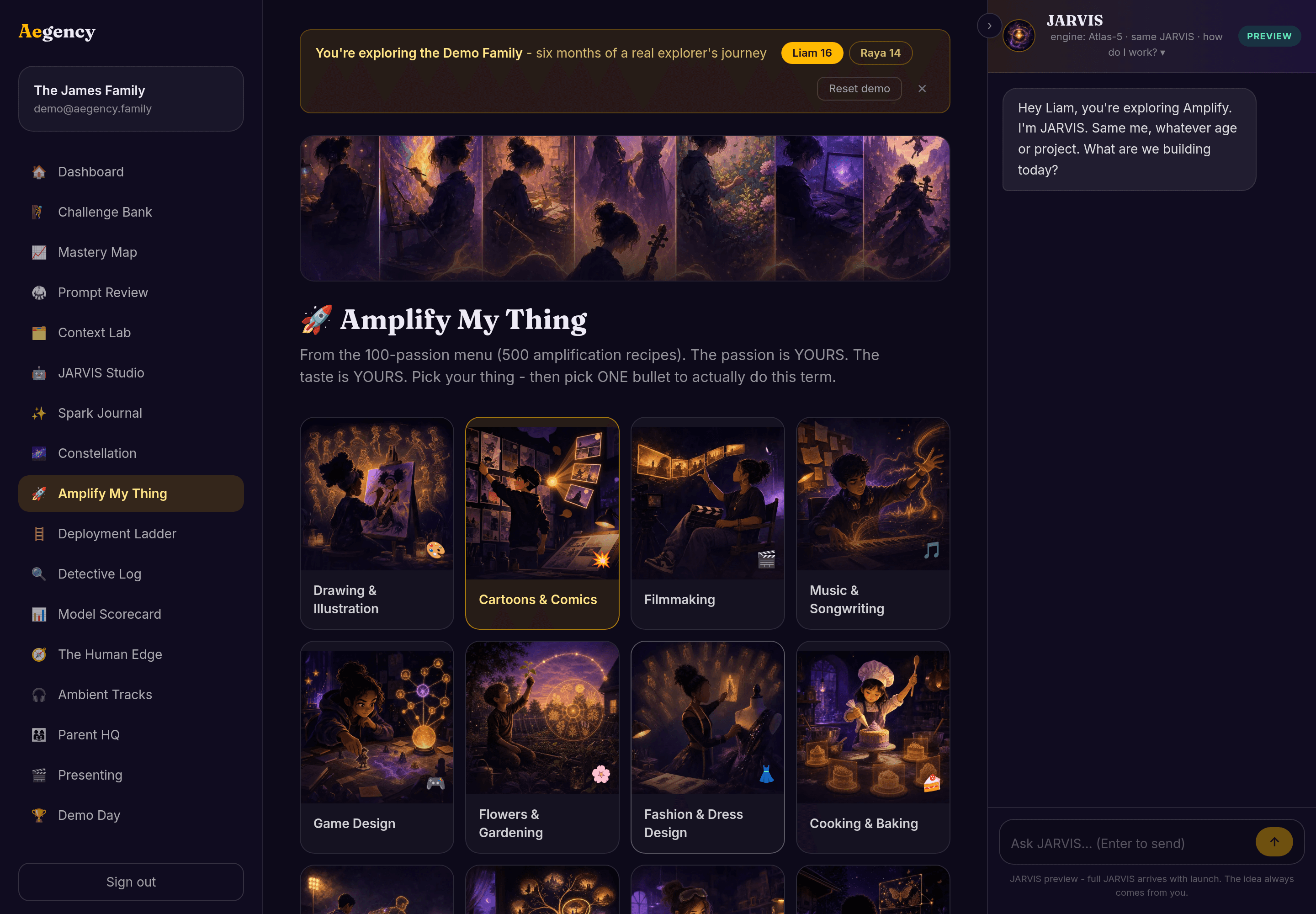
Excited about cartoons? Flowers? Dress design? Same question every time.
From the 100-passion menu: pick YOUR thing, get five concrete ways AI tools amplify your natural ability - create, learn, share, and be the best in the world at it. The passion is yours. The taste is yours.
- →12 passions live in the demo; 100 in the full menu
- →One amplification bullet per term, actually executed
- →Every recipe ends at a deployment rung
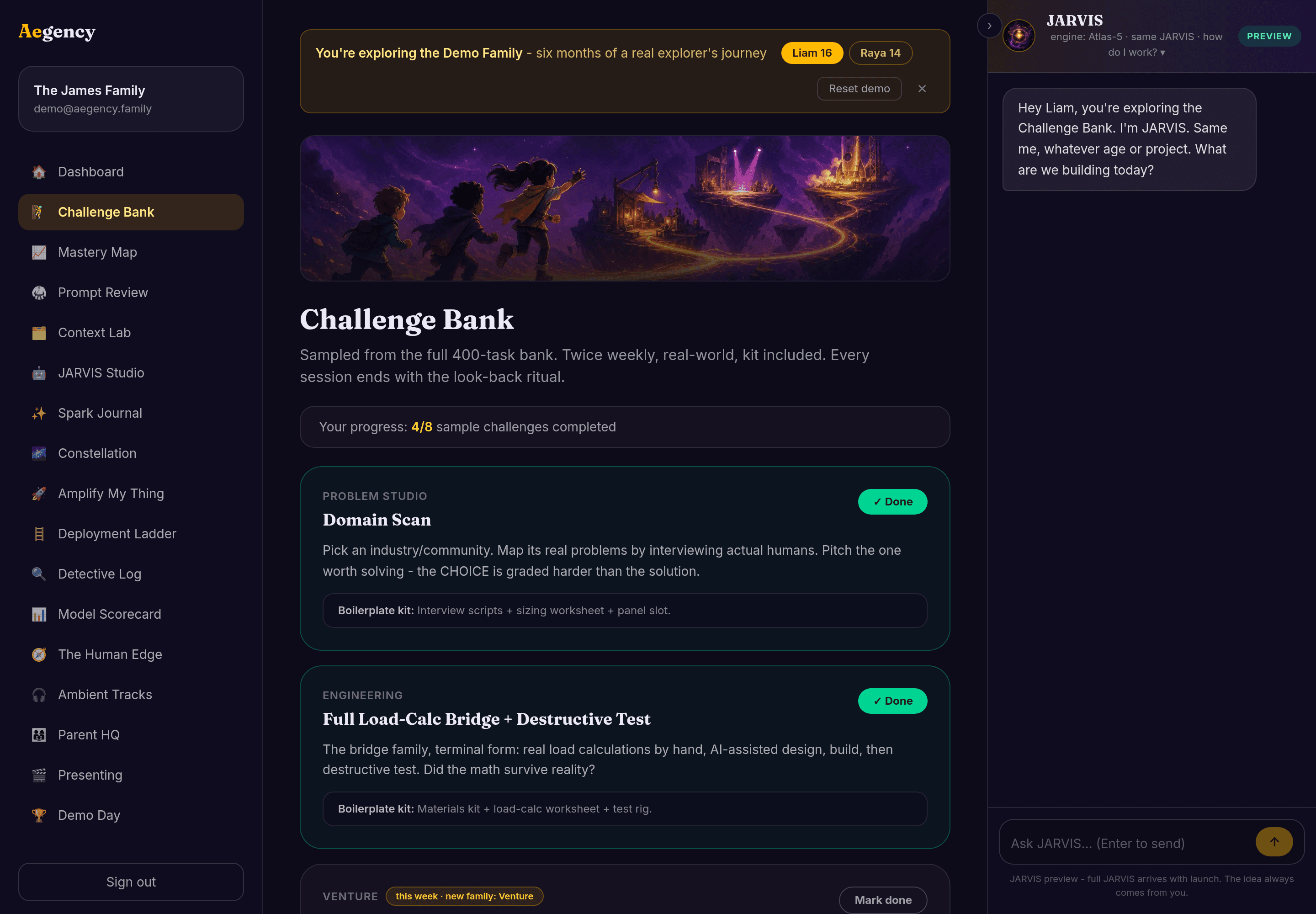
Build the bridge. Ship the school podcast. Catch the machine lying about rent prices.
Sampled from the full 400-task bank. Every task arrives with a boilerplate kit and ends with the same look-back ritual: where did AI accelerate you, where did it mislead you, what did you verify and HOW - shortcut or amplifier?
- →Recurring families that deepen with age: bridges, money, games, design
- →Kit manifests so sessions start instantly
- →Completion tracking across the whole bank
Interleaved practice (mixing task families) outperforms blocked practice for durable learning; retrieval beats re-reading.
Learning patterns #1-3 (retrieval, spacing, interleaving) ↗
Run the bridge project. Hit the scripted wall. Learn why it's there.
Guided scenario runs walk an explorer through a real challenge step by step - research, plan, build, verify - with failures scripted in on purpose: the AI confidently gets a load number wrong mid-run, and the kid has to catch it before the bridge 'collapses.' Honest label: the stepper is a simulation of the workflow, and it says so on screen. The look-back at the end is the real product.
- →Bridge-research scenario shown: five steps, one deliberately poisoned AI answer
- →The wrong answer is plausible - catching it requires the two-source rule
- →Every run ends in the standard look-back: accelerated / misled / verified how
- →Clearly labeled as a scripted simulation, not a live AI session
Productive failure - letting learners struggle with (and fail at) a problem before consolidation - produces deeper conceptual understanding than direct instruction alone (Kapur, 2008).
Kapur (2008), productive failure; applied in the scenario design ↗

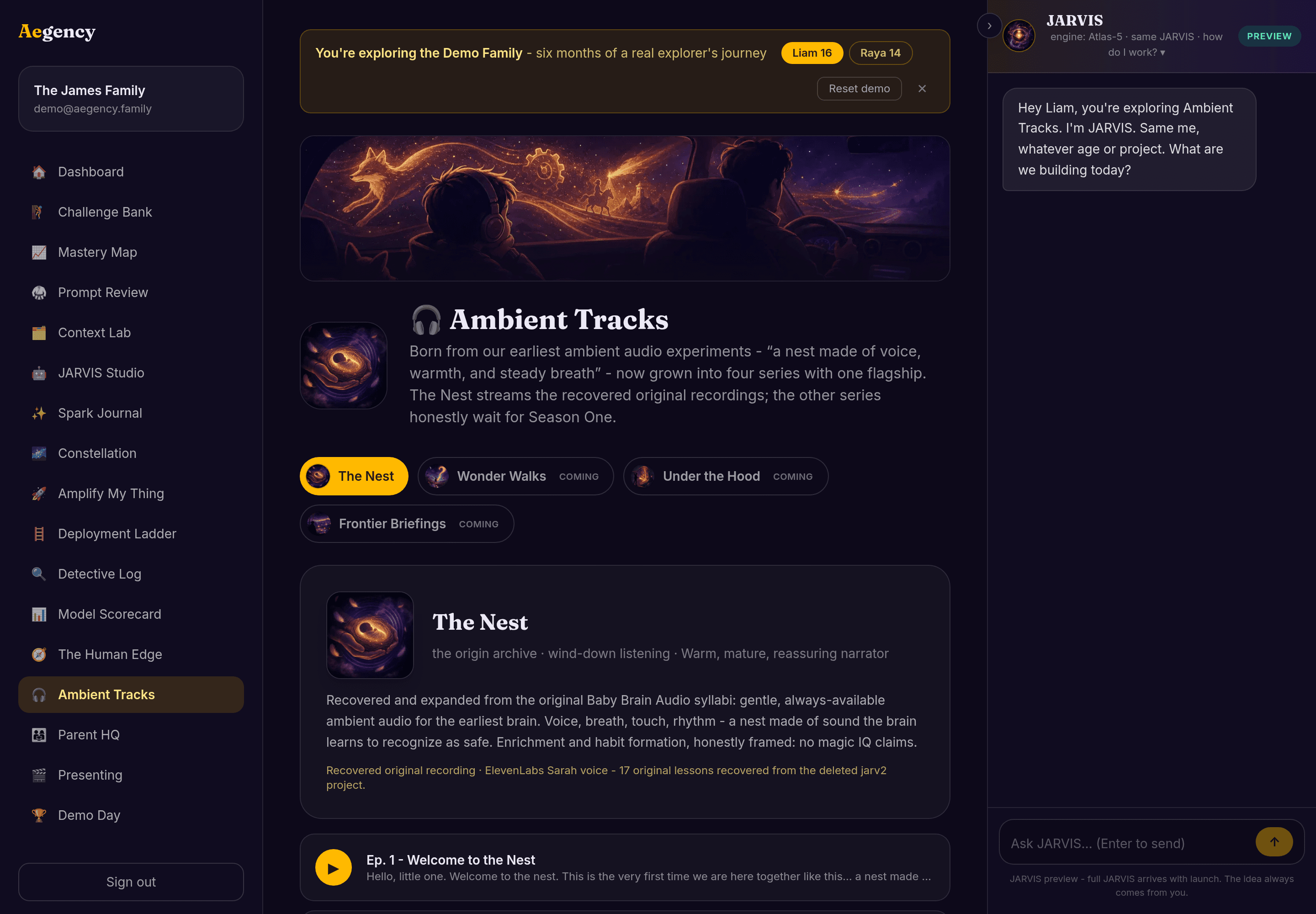
Born in the nursery. Graduates to frontier briefings.
The flagship is Frontier Briefings: weekly capability shifts decoded for people whose projects depend on them - plus the archive series that trace the program's audio roots, from The Nest's voice-and-breath origins to Under the Hood's commute-sized mechanics essays. The player is real - the shot shows an episode mid-playback - and the promise is honest: enrichment, never a babysitter, never magic-IQ claims.
- →Working in-page audio player with per-episode progress
- →Every episode ends with something to notice, test, or ask
- →The Nest: recovered original recordings - 'a nest made of voice, warmth, and steady breath'
- →Recall prompts feed the spaced-retrieval queue
Distributing exposure over time beats massing it - spaced review roughly doubles long-term retention versus cramming (Cepeda et al., 2006 meta-analysis). The tracks' end-of-episode recall prompts feed that spacing schedule.
Cepeda et al. (2006), spacing effect meta-analysis; learning patterns #1-3 ↗
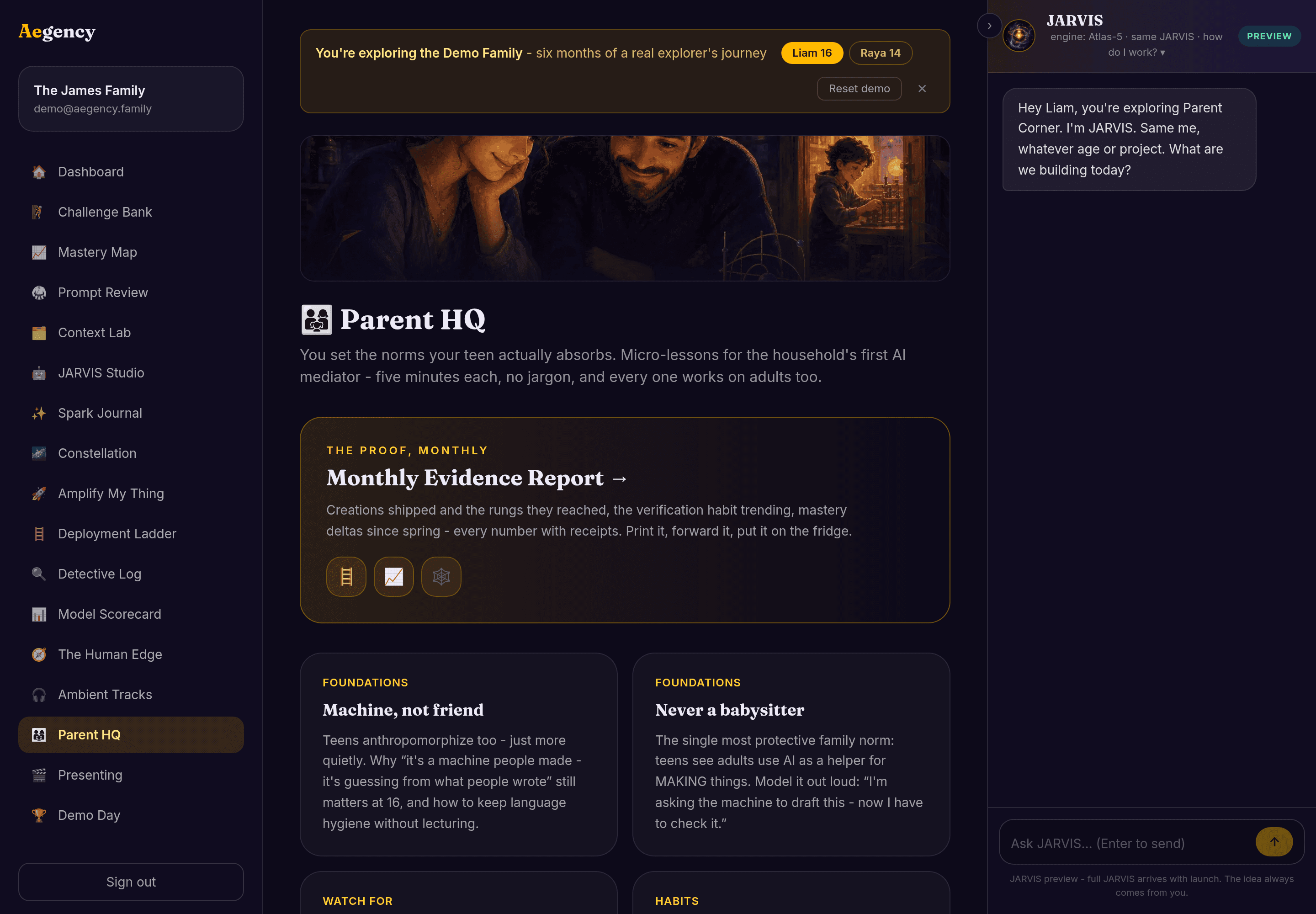
The shortcut habit is beatable. You'll see how in five minutes.
Micro-lessons for the buying parent: anthropomorphism management, the never-a-babysitter norm, praise-the-direction-not-the-rendering, and the family AI norms starter kit. Half the parents end up running the drills themselves - 14 plus turns out to include adults.
- →Eight five-minute micro-lessons, no jargon
- →The one-sentence version of the whole academy: the idea always comes from the child
- →Watch-for guides: the shortcut habit, spotted before it calcifies
Explicit family norms around AI use predict healthier tool habits than device-level restrictions alone; modeling by parents is the strongest lever.
AAP screen guidance (research doc §6) ↗
What members shipped this month.
The showcase: every project rooted in a spark, every one deployed to a real audience, every card wearing its ladder rung. Status comes from creation, not consumption - and hosting Demo Day is itself a leadership rep (North Star 12).
- →Ladder-rung badges on every showcase entry
- →Hosting rotations = leadership reps logged in the Spark Graph
- →The audience effect, institutionalized

Built on research, not vibes.
The mechanics behind these screens come from developmental psychology (Piaget's stages, Vygotsky's zone of proximal development), the learning-science canon (retrieval practice, spaced repetition, interleaving, Hattie's feedback synthesis, Self-Determination Theory), and the modern AI-literacy frameworks (AI4K12's Five Big Ideas, the OECD AILit framework, UNESCO's student competencies, MIT's PopBots work) - plus our own 100-strategy prompt-engineering catalog.
Walk through it as the Demo Family →